
The Myth of Work-Life Balance: An Alternative Approach
Work-life balance. It’s a phrase that dominates leadership discussions, self-help books, and corporate wellness initiatives. The idea is simple: if we can just divide our time and energy correctly, we will achieve a perfect equilibrium where work and life harmoniously coexist. But what if the concept of work-life balance is flawed? What if the idea of balance itself sets us up for inevitable failure?
The False Dichotomy: Work vs. Life
Work and life are often framed as opposing forces, one taking from the other in a zero-sum game. We are told to ‘find balance,’ as if these two domains are in constant competition for our time and attention. This mindset suggests that success in one area means sacrifice/failure in another, leading to frustration, guilt, and unrealistic expectations.
Life is not neatly compartmentalised. Our ability to contribute meaningfully to our work is deeply tied to our personal well-being, relationships, and sense of purpose. Likewise, the work we do, whether in a corporate setting, entrepreneurship, caregiving, or creative pursuits, is a significant part of our identity and fulfilment.
And honestly, who wants balance, anyway? Where’s the fun in that? When we love what we do, when we’re driven by purpose, passion, and the desire to build something meaningful, is ‘balancing’ work and life honestly the goal?
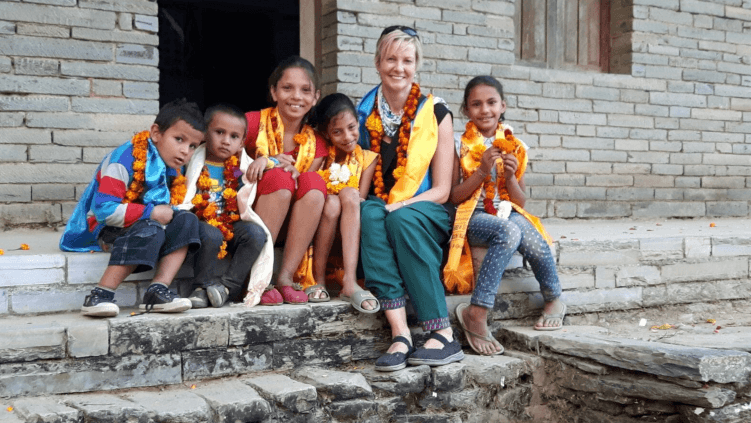
When I cofounded Rebuilding Schools Nepal after the 2015 earthquakes, I wasn’t seeking ‘balance.’ I was determined, relentless, passionate and focussed. Alongside work and family this took up huge amounts of time, money and resources. Making phone calls, connections, learning about charities, buildings, earthquake resistant structures, Nepali education governance – I wanted to push, drive and create a better future for 100s and 1000s of children for years to come. I’m pretty sure we wouldn’t have achieved what we did with the help of so many if I’d kept this in ‘balance.’ The real challenge is how we do this in ways that enrich our lives and the lives of those around us rather than deplete them.
The Three Marriages: Work, Love, and Self
Poet and philosopher David Whyte, in his book The Three Marriages, challenges the idea that our personal and professional lives are separate from the essence of who we are. He proposes that instead of balancing work and life, we are engaged in three fundamental ‘marriages’ throughout our lives:
🔆 The Marriage to Work – Our drive for purpose, contribution, and self-actualisation in our chosen field.
🔆 The Marriage to a Partner, Family, or Community – The relationships that ground us, challenge us, and give meaning to our daily existence.
🔆 The Marriage to Ourselves – Our inner life, well-being, personal growth, and connection to something greater than ourselves.
Whyte says these three marriages don’t exist in separate spheres but are constantly shaping and influencing one another. A fulfilling life does not come from perfectly dividing our time among them but from recognising their interwoven nature and learning how to navigate their evolving dynamics.
The Work-Life Balance Myth: An Impossible Standard
People often talk with me about work life balance when I’m coaching. The popular idea that we ‘should’ have work-life balance is, in itself, an assessment, not a fact. It’s a point of view that often works against us. If we accept that we should achieve balance, we create an unattainable standard that can leave us feeling at best tired, and often anxious and inadequate.
In reality, and I’m talking from the position of having been a single parent, what we’re often trying to ‘balance’ is not just work and life, but three essential, shifting priorities:
🔆 Our ability to self-actualise and enjoy our work – Finding meaning and fulfilment in what we do.
🔆 Our love for family, the practical arrangements that allow us to be present for those we care for and are responsible for – Being an engaged and loving parent, partner, friend, or caregiver.
🔆 The need for financial stability – Ensuring that we have the resources to provide security and opportunity for ourselves and those we love.
At different points in life, one of these priorities may require more attention than the others. A new parent may well need to focus on family (especially if you’re a breastfeeding mum), while an entrepreneur may devote more time to building a business – and of course you may be doing both! The key is not achieving a static balance but developing the capacity to shift and adapt with intentionality and self-awareness, and notice where you can dovetail opportunities. I began my masters degree with my new baby because maternity leave (brief as it was then) enabled me to attend the lectures I’d been longing to go to but couldn’t get time away from work.
When my son was 5, I was invited to Bulgaria for a week as part of an EU succession project to support developing disabled children’s services. I wrestled about whether or not to go, knowing he’d rather be at home with me than in the care of a relative, and I missed him dreadfully that week.
A few years later we returned to visit the town and the new children’s centre. My son, now 6, took in his surroundings, the children and their families. He moved close to me and said quietly, ‘I didn’t like it when you went to Bulgaria, but now I can see, I understand why.’ What a special moment of insight for us both. For him, moments of realisation about the richness of his own life and the work I was doing, for me, realising that a week away, hard as it was for him, brought him self-awareness and empathy. I’m not sure if these come with constant ‘balance’, undisturbed, unaltered, balance.
A More Sustainable Approach: Integration, Not Balance
Rather than striving for a mythical balance, we can approach work and life as an integrated whole, making conscious choices about where to direct our energy at any given time.
What would it be like if you were to:
🔆 Redefine Success on Your Own Terms – Instead of measuring yourself against an idealised notion of balance, define what fulfilment looks like for you at this stage of your life. Be ready to review these at times of significant change or to bring about changes you want. Success will look different at 25, 40, and 60.
🔆 Develop Fluidity, Not Rigidity – Accept that priorities shift. Some seasons require more focus on work, others on relationships or self-care. Recognising this can reduce guilt and frustration and open up new possibilities. What do you care about now? What are your curious to learn and explore.
🔆 Align Actions with Values – Rather than seeing time allocation as a battle between work and life, consider whether your daily actions align with your core values. Are you present where it matters most?
🔆 Embrace the Intersections – Instead of dividing your life into work and non-work, look for ways they enrich each other. Can your work enhance your personal growth? Can your relationships provide insight that improves your professional impact?
Final Thought: Beyond the Balance Myth
The challenge isn’t about perfectly distributing time between work and life; it’s about creating a sense of coherence and meaning across all the dimensions of who we are. By recognising the interconnectedness of work, relationships, and self, we can let go of the exhausting pursuit of balance and instead focus on living with intention, presence, and adaptability.
So, rather than asking “How do I achieve work-life balance?”, perhaps the better question is:
👉 How do I create a life where my work, relationships, and personal growth support and enrich one another?
#WorkLifeIntegration #Leadership #PersonalGrowth #CareerDevelopment #SelfAwareness