
‘Let’s hope things don’t go to plan. How boring would that be?’
I’m still laughing about this email response from Stephen Priest Principal of the British International School Tbilisi, Georgia. The truth is of course that Steve makes rigorous plans which he delivers well through his engaging leadership. He’s also a veteran of being the leader when things don’t go to plan, including leading the emergency response for The British School in Kathmandu after the 2015 earthquakes. So, his comment is made with insight and humour, and without flippancy.
The start of a school year is a good time to reflect and re-orientate. Some of my most precious memories and potentially best contributions have been made when things definitely didn’t go to plan.
- Being lost in the Lattari Mountains and suddenly seeing Vesuvius loom out of the mist. With a clear landmark I knew where I was, and with maps and a compass we navigated our way back on route. A raw and precious moment, a mixture of anxiety at being lost and wonder at the magnificence of the vista across the bay.
- Being stuck in Delhi Airport for 24 hours and encountering the kindness and hospitality of strangers.
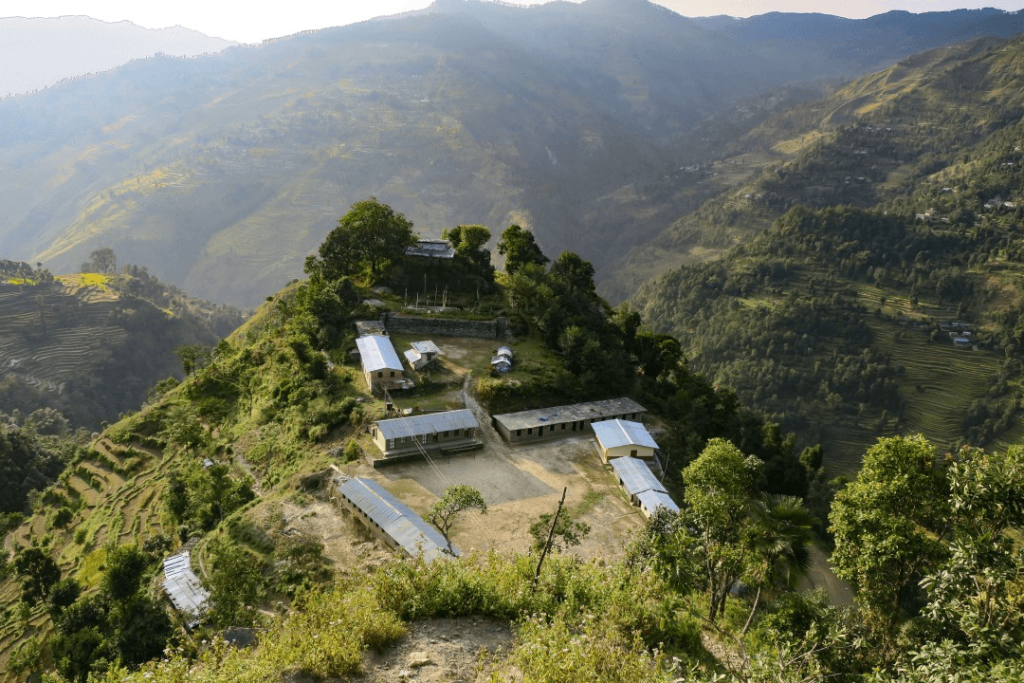
- Co-founding Rebuilding Schools Nepal, and re-building a secondary school in the remote Himalayan mid-hills, regularly staying in a remote village with the headteacher and family as the project develops.
In ontological coaching we call these events ‘interruptions to the anticipated flow of life’. We all have them, and they can be positive or negative depending on the nature of the interruption, the impact, and how we experience and live through it.
I love having a plan. I’m serious about getting organised, having a strategy and agreeing priorities. This has served me well over the years enabling me to deliver on demanding roles and responsibilities at work (whilst simultaneously delivering an MA dissertation and having a baby). Being alert to possibilities, observant, curious and flexible need to be in the mix too. Stringent adherence to a plan can close down possibilities and creativity if we’re not prepared to review and change, especially when we encounter ‘interruptions’.
Alan Sieler, when writing about possibility juxtaposes a ‘mood of resignation’ with a ‘mood of ambition’. Resignation about what’s not possible for us can be dressed up and justified with excuses, and potentially clever and cynical arguments all located around what’s not possible. ‘The trouble is…’ has become a family joke based on the orientation of one particular member! A mood of ambition is characterised by hope, desire, enthusiasm, persistence, determination and courage. The story we have about what’s happening holds deep significance for our orientation. Really noticing our story and getting our internal listening explicit enables us to reflect on how well it’s serving us to lead the life we want. This is worth thinking about.
The Dalai Lama says, ‘Sometimes, not getting what we hope for is a glorious stroke of luck!’ which resonates with Steve’s take on planning, and conveys a warm sense of humour about the inevitable uncertainty we all face.